When football becomes a religion: Naples, Maradona, and the beautiful game
There are cities where football is a sport. Naples is not one of them.
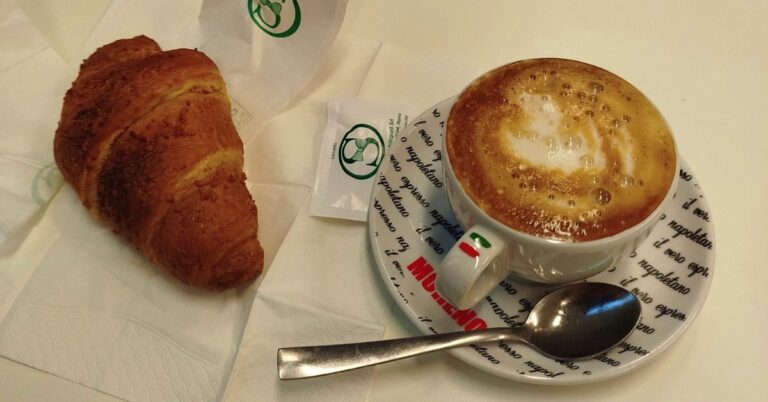
In Naples, football is a fever. A faith. A language spoken by everyone — from the old men lingering over espresso at the bar to the children who learn “Forza Napoli!” before they can write their own name.
If you want to understand Naples, you have to understand its relationship with football. And to understand that, you have to start with one name.
The man who changed everything
For most of its history, Calcio Napoli was a modest club — respected, but never celebrated. That changed in 1984, when a young Argentine arrived in southern Italy and chose, against all expectations, to make Naples his home.
Diego Armando Maradona didn’t just bring the club two Serie A championships — the first in its history. He gave Naples something far more precious: dignity.
In the 1980s, Naples was a city struggling with poverty, crime, and the contempt of northern Italy. Maradona didn’t just win football matches. He made the world look at Naples differently. He made Neapolitans see themselves differently.
For this, the city never forgot him.
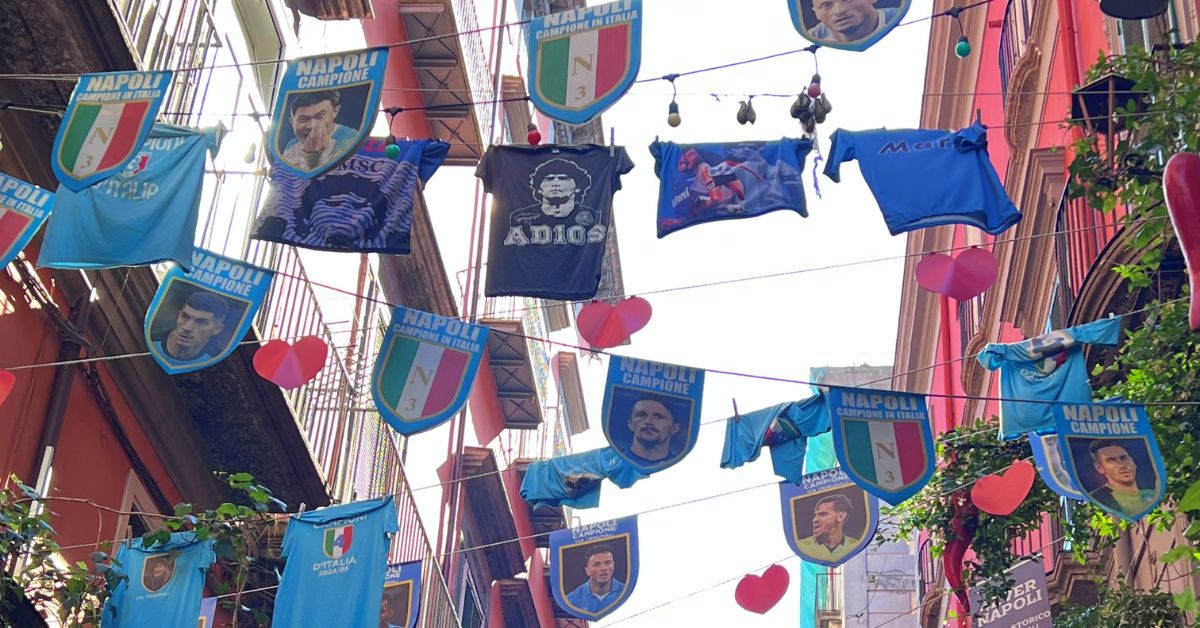
Today, decades after his death, Maradona is everywhere. His face covers entire building walls in the narrow streets of the Spanish Quarter. You’ll find him on santini — the same devotional cards used for Catholic saints. On stickers on motorbikes, in murals over doorways, in tattoos on forearms. In Naples, he is not a footballer who once lived there. He is, with complete and sincere devotion, a god. El Dios.
When the city goes quiet
When Napoli plays, Naples stops.
Shops pull down their shutters early. Families gather. Bars and restaurants fill every corner with screens. And the streets — those noisy, chaotic, impossibly alive streets — fall into a silence that feels almost sacred.
What’s remarkable is who watches. In Naples, football doesn’t belong to one type of person. Elderly nonni sit at café tables, their coffee going cold, eyes fixed on the screen. Groups of young women clutch each other’s arms during penalties. Teenagers argue tactics with the authority of coaches. Children who barely reach the bar counter crane their necks toward the screen.
Football here is not divided by age or gender. It belongs to everyone. It is shared.
And when Napoli scores — the city erupts. A roar rises from every window, every balcony, every street corner, all at once, like a single enormous breath released after too long held in. If you’ve never heard it, it’s impossible to describe. If you have, you never forget it.
The Rituals
Neapolitan football is also deeply, wonderfully, unapologetically superstitious.
Every serious tifoso has their rituals — private systems of luck followed with religious consistency. My friend Peppe is a perfect example. Before every Napoli match, he must wear his old Maradona shirt — the original, faded, worn at the elbows. He must sit in the exact same spot on his sofa. He must watch in the same house, always. No exceptions.
If any of these conditions aren’t met, he is completely convinced the team will lose. And honestly? I wouldn’t argue with him.
Across the city, fans are arranging lucky charms, avoiding certain foods, repeating private mantras they’d never say out loud. There is an unspoken, collective belief that what you do in your living room — the shirt you wear, the chair you sit in — somehow matters to what happens on the pitch.
It is completely irrational. It is completely sincere. And it is one of the most human things I know.
More than a sport
In Naples, football is not just a sport.
It is a memory — of Maradona lifting a trophy and an entire city lifting with him. It is a ritual — of gathering, of wearing the right shirt, of holding your breath in exactly the right way. It is a language — one that everyone speaks, and that connects strangers in the same instant.
When I think about what makes Italian culture so alive, so warm, so endlessly layered, it’s exactly this: the way identity is built in small, repeated moments. A coffee before the match. A seat worn into the sofa. A roar you recognize before you even reach the window.
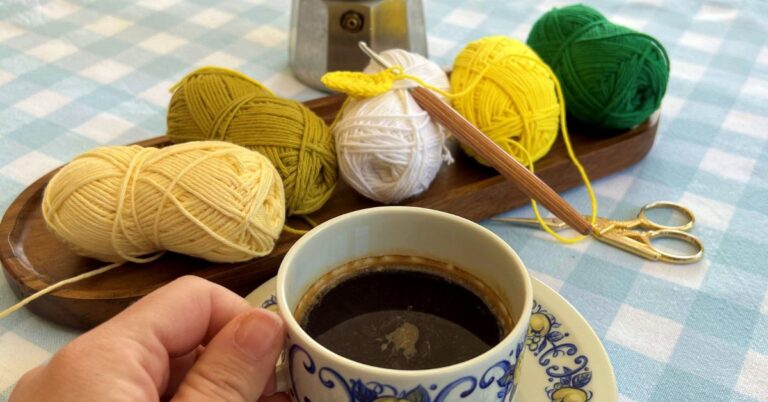
This is the Italy I carry with me — and the Italy I try to capture, stitch by stitch, in every piece I make.
Explore my handmade collection of Italian-inspired keychains — small pieces of the Italy that stays with you.