Nonna’s Sunday ragù with braciolette: the Recipe that filled our heart
If you have read my post about the Sunday lunch ritual in Southern Italy, you already know that in my grandmother’s house, Sunday began at half past seven — with espresso on one burner and ragù on the other.
This is that ragù.
It is called ragù con le braciolette — a slow-cooked tomato sauce with small rolled parcels of veal, filled with butter, raisins, and pine nuts. Yes, raisins and pine nuts. In the meat. I know it sounds unusual — and as a child, I thought so too. But that slight sweetness against the deep, savoury sauce was exactly what made it unforgettable. It was my grandmother’s signature. Her secret.
The preparation was long and slow, the way the best things always are. It started while we were still having breakfast, and by the time lunch was ready, the whole house — every room, every corner — smelled of home.
Braciolette: what are they?
Braciolette are small rolled parcels of meat — a Southern Italian tradition, particularly Neapolitan. Thin slices of veal are filled with a few simple ingredients, rolled up tightly, and sealed with a toothpick before being browned and slow-cooked in tomato sauce.
They are not difficult to make. They simply require patience — and love.
Nonna’s Ragù with Braciolette
Ingredients
Serves 6–8 people (as nonna always cooked for a crowd)
For the braciolette:
- 8–10 thin slices of veal (fettine di vitello)
- A small knob of butter for each slice
- A pinch of salt
- A small handful of raisins (uvetta)
- A small handful of pine nuts (pinoli)
- Toothpicks to seal
For the ragù:
- 1 large white onion, finely sliced
- Abundant extra virgin olive oil (noi non conosciamo altro olio — we know no other oil!)
- 1 bottle of good tomato passata — ideally homemade, made the previous summer with pomodori paesani (garden tomatoes)
- Salt to taste
- A few fresh basil leaves (from the plant on the balcony)
To serve:
- Pasta of your choice — rigatoni, paccheri, or use the ragù for lasagna, cannelloni, or pasta al forno
- Ricotta or Parmigiano, added at the end
Method
Prepare the braciolette
Lay each thin slice of veal flat on a clean surface. On each slice, place a small knob of butter (this keeps the meat tender and moist during the long cooking), a pinch of salt, a few raisins, and a few pine nuts.
Roll the slice up tightly, folding the sides in as you go, and seal it closed with a toothpick. Set aside and repeat with each slice.
Nonna’s note: don’t be shy with the raisins and pine nuts — that little hint of sweetness is the whole point. It is what makes this ragù different from all the others.
Start the ragù
In a large, heavy-bottomed pot, pour a generous amount of extra virgin olive oil and add the sliced onion. Let it soften slowly over a medium-low flame until it turns golden — imbiondire, we say in Italian. Don’t rush this step.
Once the onion is ready, add the braciolette. Let them brown on all sides, turning them gently, until they have colour and a little crust. This is where the flavour begins.
Now pour in the tomato passata. Here comes the nonna trick: fill the empty bottle with a little water, swirl it to catch every last drop of sauce clinging to the glass, and add that too. Nothing is wasted.
Add salt and a few fresh basil leaves. Stir everything together.
Let it pippiare
Lower the flame to the minimum. Place the lid on the pot, leaving it slightly ajar. And then — wait.
The ragù needs to pippiare for at least 3 to 4 hours. Pippiare is a Neapolitan word for the way a sauce simmers very slowly — almost whispering, barely bubbling, just gently breathing. Stir it occasionally, and resist the urge to turn up the heat.
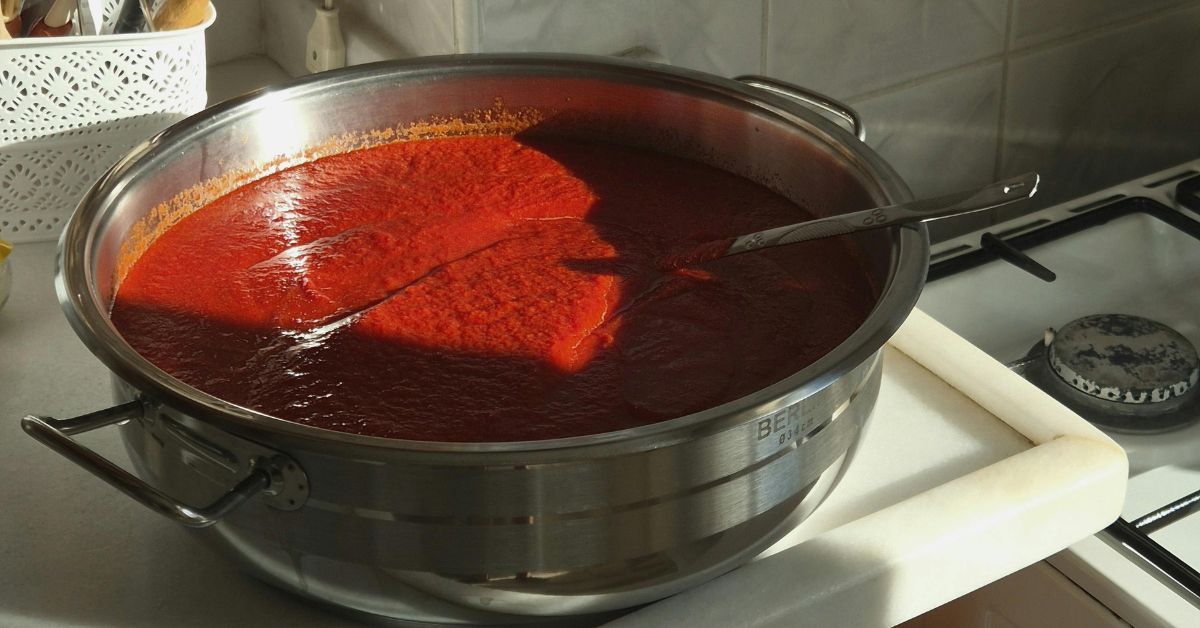
As it cooks, the sauce will reduce — by at least two fingers on the side of the pot — and become thick, deep, and impossibly fragrant. The whole house will fill with that smell.
How do you know it is ready? Look at the mark it leaves on the inside of the pot. When the sauce has reduced and thickened enough to leave a clear line on the walls of the pan, it is done.
Serve
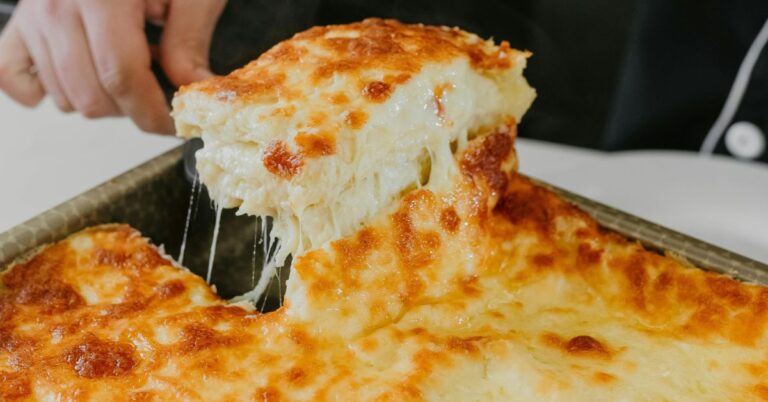
Use the ragù to dress your pasta of choice. Nonna loved it with a spoonful of ricotta stirred in at the very end, or a generous handful of Parmigiano. It is also the perfect sauce for lasagna, cannelloni, or pasta al forno — the true Sunday pasta.
The braciolette themselves are served as a second course, after the pasta. Two courses, one pot. That is the Southern Italian way.
A Recipe Worth the Wait
This is not a quick weeknight dinner. It is a Sunday ritual — a reason to stay in the kitchen, to stir and taste and wait, to let the smell fill every room.
It is the recipe I think of when I miss home most. And it is the one I will teach my children one day, exactly as my nonna taught me.
Have you ever tried making a slow-cooked Italian ragù? Leave a comment below — I’d love to hear how it goes. And if you make it, share a photo on Instagram and tag me!